
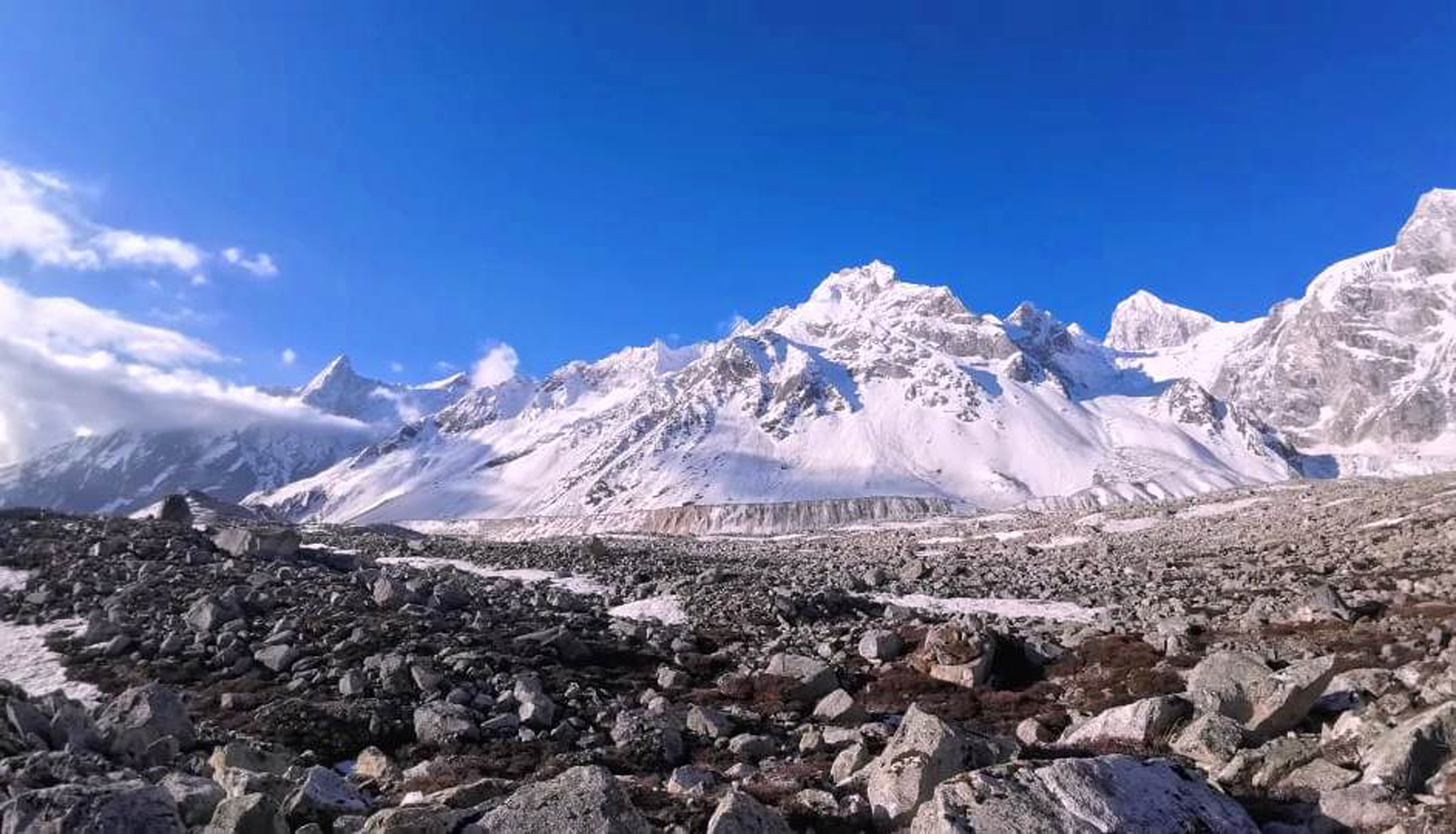
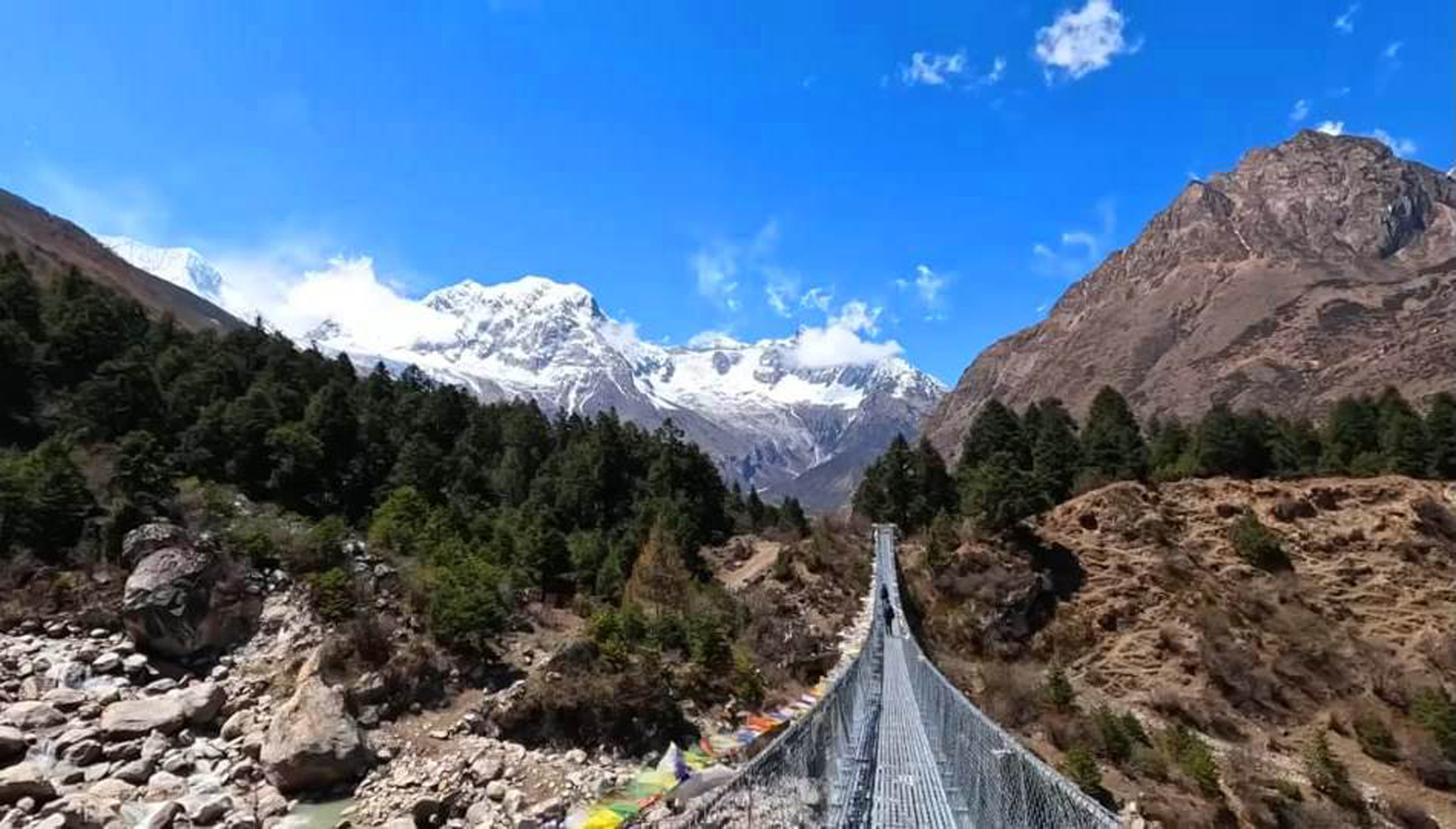
The Manaslu Circuit Trek is one of Nepal’s most rewarding trekking routes, offering an incredible blend of cultural richness, natural beauty and Himalayan adventure. This journey takes you from the green, terraced hills of the lower Budhi Gandaki Valley—home to Hindu farming communities—to the high alpine zone where Tibetan-influenced villages and Buddhist traditions dominate.
Named after Mt. Manaslu (8,163m)—the “Mountain of the Spirit” and the world’s eighth highest peak—this trek is a visual and cultural feast. The trail gradually ascends through remote villages, lush forests, steep river gorges and High Mountain pastures. You’ll encounter ancient monasteries, spinning prayer wheels, colorful mani walls, and friendly locals whose customs and lifestyles have remained unchanged for generations.
One of the most thrilling parts of the trek is the crossing of the Larke La Pass (5,160m). This high-altitude challenge offers panoramic views of snow-covered peaks, including Manaslu, Himlung, Cheo, and Annapurna II. After crossing the pass, the trail descends into the Marshyangdi Valley, eventually linking up with the famous Annapurna Circuit.
Unlike the more crowded trekking routes in Nepal, the Manaslu Circuit remains less traveled and peaceful, making it ideal for trekkers seeking authentic mountain wilderness and deep cultural encounters. The trail requires a special permit and a licensed guide, helping preserve its pristine environment and remote charm.
Whether you’re drawn by the breathtaking scenery, the varied landscapes, or the deep-rooted traditions, the Manaslu Circuit offers a truly unforgettable Himalayan trekking experience.
The Manaslu Circuit is often compared in scope and difficulty to the Everest Three Passes Trek, making it a natural next challenge for experienced trekkers who have explored the Khumbu. Those drawn to Nepal’s most remote landscapes should also consider the Upper Dolpo Trek, an even more secluded high-altitude circuit in the far west. For a contrasting adventure that blends trekking with cultural immersion in the forbidden kingdom, the Upper Mustang Trek is an equally compelling restricted-area journey.
Choosing the right time to trek the Manaslu Circuit is key to enjoying clear mountain views, comfortable weather, and safe trail conditions. While the trek can be attempted most of the year, spring and autumn are widely regarded as the best seasons for this adventure.
Spring (March to May): Spring brings the landscape to life with blooming rhododendrons, fresh greenery, and mild temperatures. The skies are generally clear, offering spectacular views of Mount Manaslu (8,163m) and the surrounding peaks. This season is perfect for photography, and the trails are less crowded than in other trekking regions.
Autumn (September to November): Autumn is the most popular season for the Manaslu Circuit Trek. After the summer monsoon, the air is fresh and the skies are crystal clear. This is the best time for panoramic Himalayan views and stable weather, especially for safely crossing the Larke La Pass (5,160m). You’ll also experience local cultural festivals like Dashain and Tihar in the villages along the way.
Off-Seasons: Monsoon & Winter: Monsoon (June to August): Heavy rain can cause slippery trails, landslides, and limited visibility. The region also experiences leeches and high humidity.
Winter (December to February): Cold temperatures and heavy snowfall can make the pass impassable. Only experienced trekkers with proper winter gear should attempt the trek during this time.
Final Thoughts: For the best experience, plan your Manaslu Circuit Trek during spring or autumn, when the weather is stable, the views are clear and the trails are most enjoyable.
The weather and temperature on the Manaslu Circuit Trek vary greatly depending on the season and altitude. Since the trek ranges from low hills to high alpine passes, you’ll experience a mix of climates—from warm valleys to cold, windy mountain terrain.
Spring (March to May)
Weather: Stable and pleasant with longer daylight hours.
Temperature:
Autumn (September to November)
Weather: Dry, clear, and cool with crisp mountain air.
Temperature:
Monsoon (June to August):
Weather: Wet and humid with frequent rainfall.
Temperature:
Winter (December to February):
Weather: Cold and dry with occasional snowstorms.
Temperature:
Food: Along the Manaslu Circuit Trek, meals are mainly served at teahouses and lodges in the villages you pass through. The cuisine is a blend of Nepali and Tibetan flavors, offering hearty and simple dishes to keep you energized. Common meals include:
Most teahouses offer vegetarian and non-vegetarian options, along with tea, coffee, and hot chocolate. It’s advisable to carry some energy bars or snacks for longer trekking days.
Accommodation: Accommodation along the Manaslu Circuit is primarily in basic teahouses and lodges, offering shared rooms with simple beds and blankets. Facilities vary but generally include:
While accommodations are modest, they provide a warm and friendly environment where trekkers can rest, share stories, and enjoy local hospitality.
Getting to and from the Manaslu region involves a combination of road travel and trekking, as the area is remote and not accessible by air.
Getting to the Trailhead:
Most trekkers start their journey from Kathmandu, Nepal’s capital. From Kathmandu, you’ll take a long drive (about 8–9 hours) to the trailhead area, usually Soti Khola or Arughat, depending on your chosen route and road conditions. The drive follows winding mountain roads that pass through scenic rural landscapes, terraced hills, and river valleys.
Transport options include:
Private jeep or SUV: Offers comfort and flexibility, ideal for groups or those seeking convenience
Local bus: A budget-friendly option but slower and less comfortable, with a more rugged ride
Tour company vehicle: Many trekking agencies provide transportation as part of their packages
Returning from the Trek:
After completing the circuit at Chamje, you’ll take a road transfer back to Kathmandu, which can take 9–10 hours depending on road conditions. The return journey offers views of the Marshyangdi River and lush farmland.
Important Tips
Connectivity along the Manaslu Circuit Trek is limited due to the region’s remote and mountainous terrain. Here’s what to expect regarding internet access and mobile coverage:
Mobile Network
Most major Nepali telecom providers such as Ncell and Nepal Telecom offer partial mobile coverage along the Manaslu trail. Signal strength varies greatly depending on your location:
Internet Access
Internet access is very limited and mostly available at teahouses or lodges in bigger villages. Even then, the connection tends to be slow and unreliable due to reliance on satellite or limited cellular data.
Tips for Staying Connected
Proper acclimatization is vital for a successful and safe Manaslu Circuit Trek. As the trek reaches high altitudes — including the challenging Larke La Pass (5,160 meters) — your body needs time to adjust to the thinner air to avoid altitude sickness.
Why Acclimatization Matters on the Manaslu Circuit Trek:
The Manaslu Circuit involves trekking through rugged terrain and rapidly changing elevations. Without proper acclimatization, trekkers risk symptoms like headaches, nausea, dizziness, and fatigue, which can impact health and the overall trekking experience.
Best Acclimatization Practices on the Manaslu Trek:
Benefits of Proper Acclimatization: Following acclimatization guidelines increases your chances of completing the Manaslu Circuit trek comfortably and safely while fully enjoying the breathtaking Himalayan scenery and rich cultural experiences.
The Manaslu Circuit Trek offers not only breathtaking mountain views and cultural richness but also a diverse natural environment filled with unique flora and fauna. Trekking through varying altitudes from subtropical forests to alpine meadows, you’ll encounter a wide range of plant and animal species.
Flora: The lower regions of the trek are covered with dense subtropical forests featuring species like sal, oak, rhododendron, and pine trees. In spring, the rhododendron blooms paint the hillsides with vibrant reds and pinks.
As you ascend, the forests thin out, giving way to alpine shrubs, wildflowers, and grasses. You’ll see hardy plants like juniper, birch, and blue poppies thriving in the harsh mountain climate.
Fauna: The Manaslu region is home to a variety of wildlife. You might spot animals such as:
Various bird species, including Himalayan monal pheasant, lammergeier vultures, and blood pheasants
Wildlife sightings are more common in the early mornings or evenings when animals are most active.
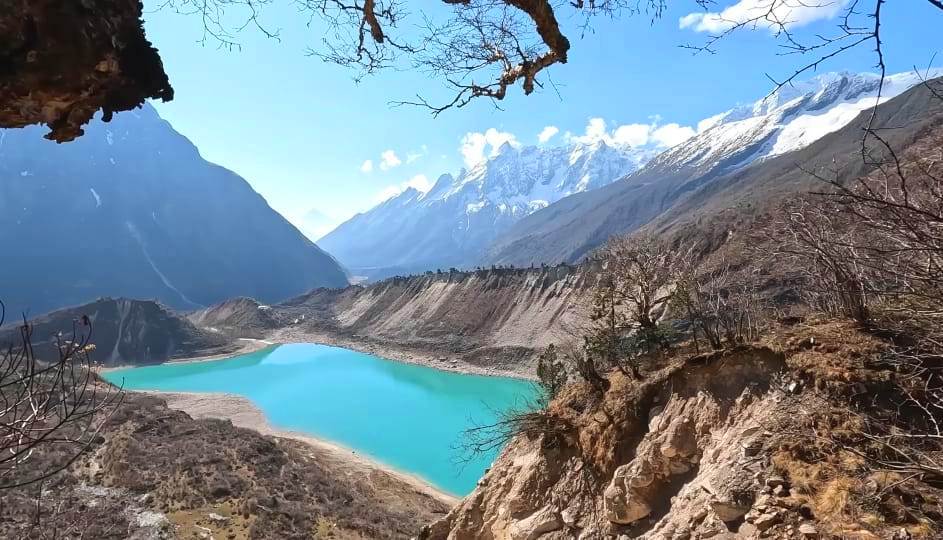
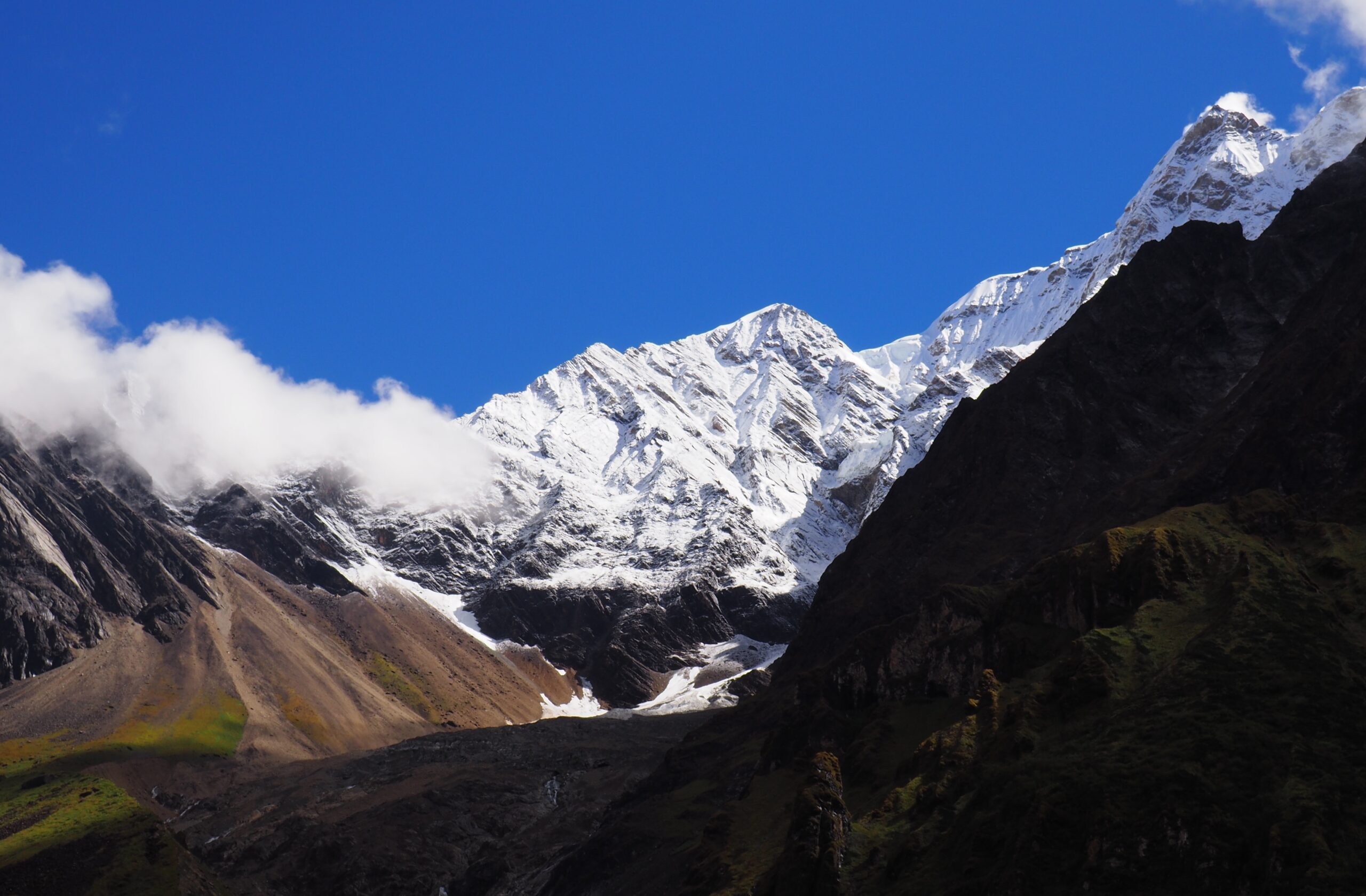
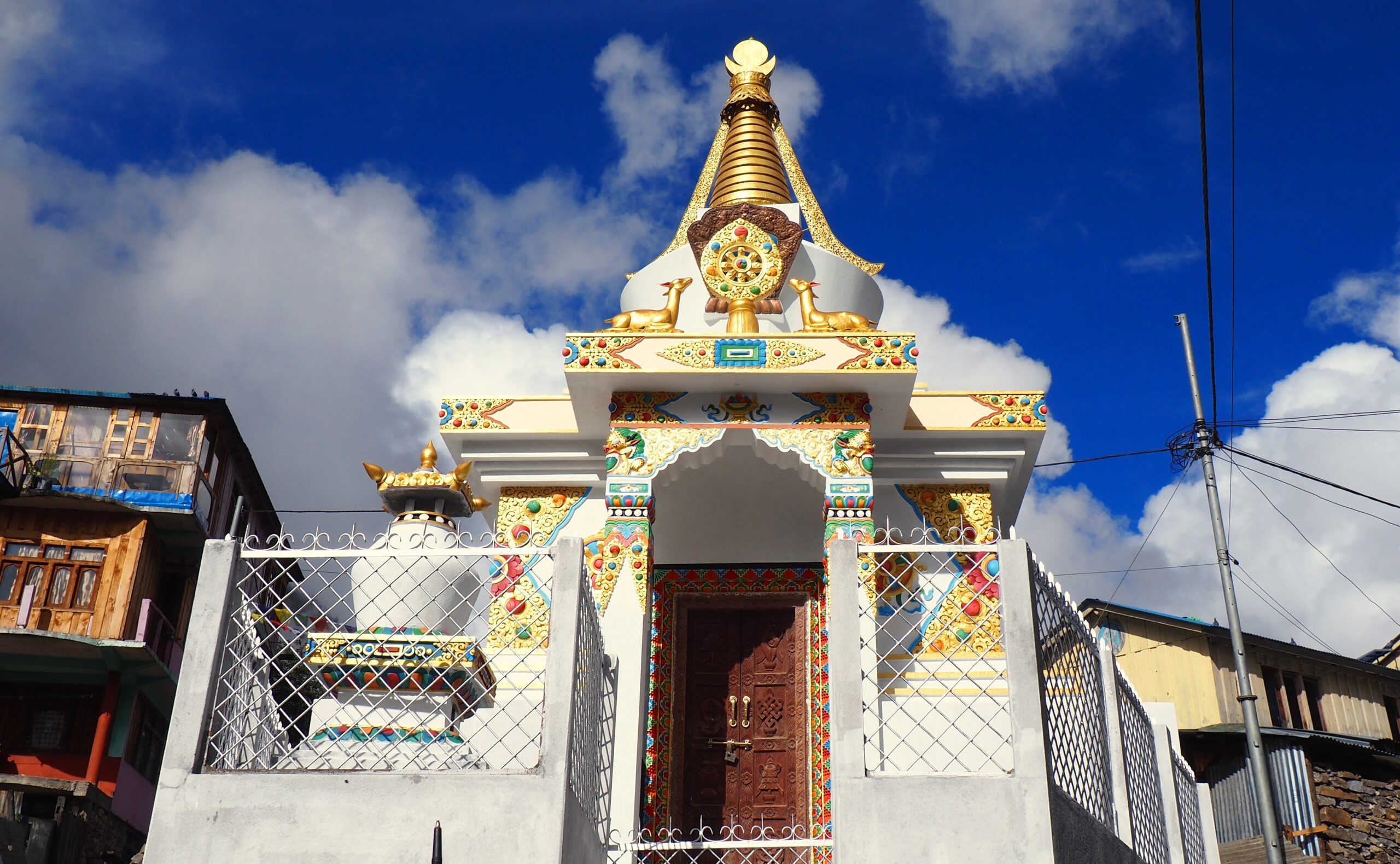

The Manaslu Circuit Trek is not only a journey through spectacular mountain landscapes but also an exploration of rich and varied cultural traditions. This remote region of Nepal is home to diverse ethnic groups, each with its own unique customs, languages, and lifestyles.
Tibetan Influence: Many villages along the trek, such as Samagaun and Samdo, showcase strong Tibetan Buddhist culture. Here, you’ll find ancient monasteries, colorful prayer flags, mani walls, and traditional stone houses. The local people often follow Tibetan Buddhist practices, celebrating festivals like Losar (Tibetan New Year) with vibrant rituals.
Gurung and Other Ethnic Groups
In the lower sections of the trail, you’ll encounter Gurung and other Nepali ethnic communities. Their warm hospitality and traditional lifestyles offer a glimpse into the agricultural and mountain living that has shaped Nepal’s middle hills for centuries.
Language and Traditions:
Throughout the trek, you’ll hear a mix of languages including Nepali, Tamang, and Tibetan dialects. Each village has its own customs, clothing styles, and festivals, enriching the trekking experience with authentic cultural encounters.
Home-stays and Local Interaction
Many teahouses and lodges are family-run, allowing trekkers to engage closely with locals, taste traditional foods, and learn about their way of life. This cultural immersion is one of the highlights of the Manaslu Circuit Trek.
The Manaslu Circuit Trek is not only a journey through spectacular mountain landscapes but also an exploration of rich and varied cultural traditions. This remote region of Nepal is home to diverse ethnic groups, each with its own unique customs, languages, and lifestyles.
Tibetan Influence: Many villages along the trek, such as Samagaun and Samdo, showcase strong Tibetan Buddhist culture. Here, you’ll find ancient monasteries, colorful prayer flags, mani walls, and traditional stone houses. The local people often follow Tibetan Buddhist practices, celebrating festivals like Losar (Tibetan New Year) with vibrant rituals.
Gurung and Other Ethnic Groups
In the lower sections of the trail, you’ll encounter Gurung and other Nepali ethnic communities. Their warm hospitality and traditional lifestyles offer a glimpse into the agricultural and mountain living that has shaped Nepal’s middle hills for centuries.
Language and Traditions:
Throughout the trek, you’ll hear a mix of languages including Nepali, Tamang, and Tibetan dialects. Each village has its own customs, clothing styles, and festivals, enriching the trekking experience with authentic cultural encounters.
Home-stays and Local Interaction
Many teahouses and lodges are family-run, allowing trekkers to engage closely with locals, taste traditional foods, and learn about their way of life. This cultural immersion is one of the highlights of the Manaslu Circuit Trek.
The Manaslu Circuit Trek not only showcases Nepal’s stunning natural beauty but also offers a deep dive into the vibrant traditions and festivals of the local communities. The region is culturally diverse, with strong Tibetan Buddhist influences shaping many of its customs and celebrations.
Major Festivals:
Cultural Experiences
During festivals, trekkers may witness masked dances, traditional music performances, and communal feasts, providing an immersive cultural experience. Even outside festival times, the locals’ daily rituals and warm hospitality offer insights into their spiritual and social lives.
Packing the right gear for the Manaslu Circuit Trek is crucial for comfort, safety, and success. The trek involves diverse terrain, changing altitudes, and varying weather conditions, so your equipment should be suited for both warm days and freezing nights.
Below is a comprehensive checklist to help you prepare:
Clothing
Base Layers (Inner Wear):
Mid Layers (Insulation):
Outer Layer (Shell):
Trekking Shirts & Pants:
Warm Wear for Evenings:
Underwear & Sleepwear:
Head & Hand Wear:
Footwear:
Sleeping Gear
Trekking Essentials
Personal Items & Toiletries
First Aid & Medications:
Electronics & Accessories:
Snacks & Hydration:
Travel insurance is an essential part of preparing for the Manaslu Circuit Trek due to the trek’s remote location, challenging terrain, and high-altitude conditions. Here’s why having comprehensive travel insurance is crucial for your safety and peace of mind.
Coverage for Medical Emergencies: The Manaslu region is remote, and medical facilities are limited. Travel insurance covers emergency medical treatment, including hospitalization and medication, which can be costly without insurance.
High-Altitude Evacuation: One of the biggest risks on the trek is altitude sickness. In severe cases, evacuation by helicopter may be necessary. Travel insurance helps cover the expensive costs of emergency evacuation and rescue operations.
Trip Cancellation and Delays: Unexpected events such as weather changes, political unrest, or personal emergencies can disrupt your trek. Travel insurance offers financial protection if you need to cancel or delay your trip.
Lost or Stolen Belongings: Insurance can reimburse you for lost or stolen luggage, equipment, or personal items, which is especially important when trekking in remote areas.
Nepal
14 Days
Easy to Moderate
Trekking
Kathmandu
Kathmandu
5,160m (Larke La Pass)
Local Lodges / Hotel
Not included
1 to 10
Spring (March–May) & autumn (September–November)
Manaslu Restricted Area Permit/Manaslu Conservation Area (MCAP) Permit/Annapurna Conservation Area (ACAP) Permit