
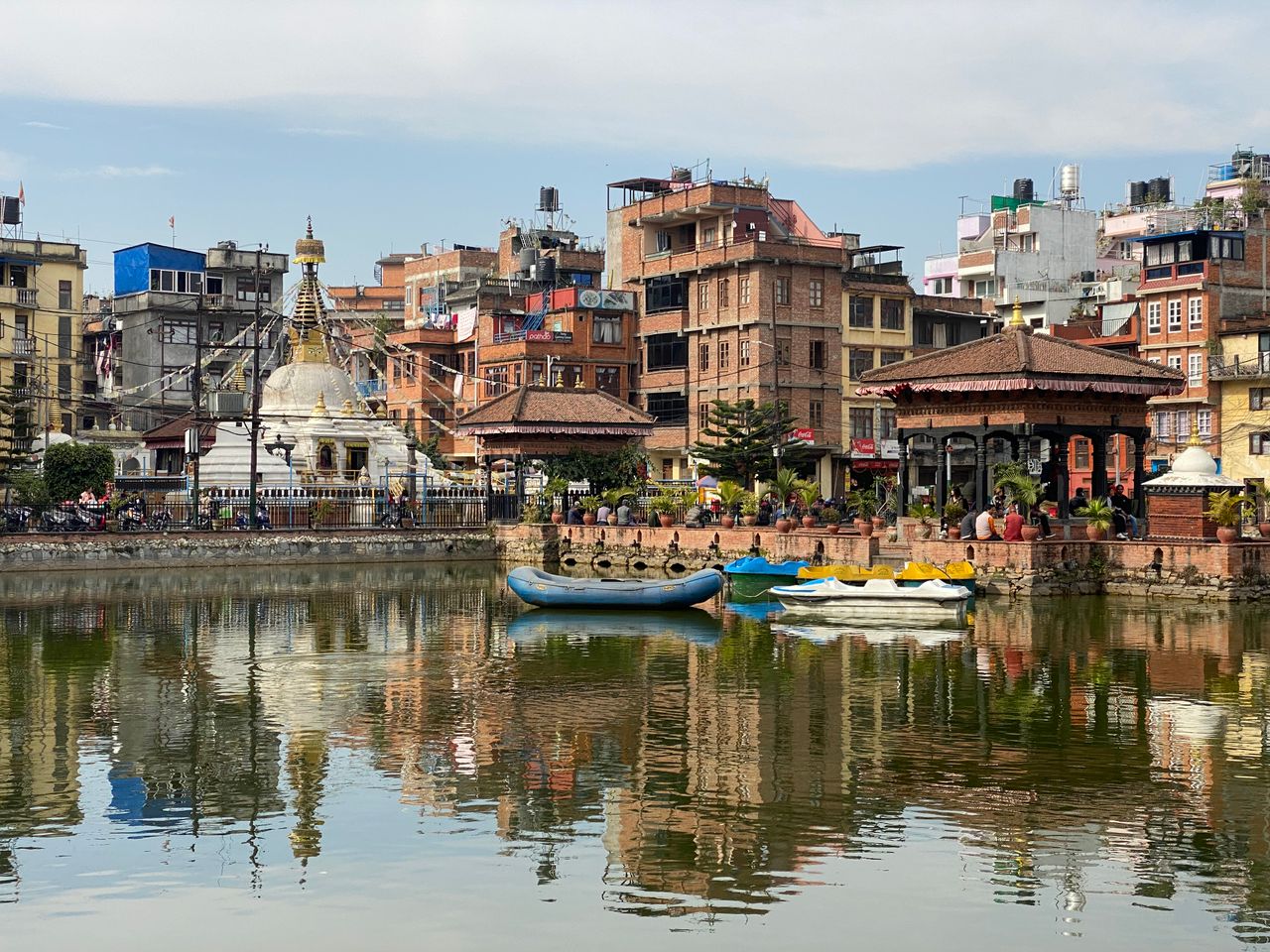
Most visitors arrive in Kathmandu with one thing on their mind: the mountains. They land, book a teahouse trek, and treat the city like an airport lounge. They miss the point.
Kathmandu is one of the most layered cities in Asia. Within a few square kilometers you have three UNESCO World Heritage sites, one of the largest Buddhist stupas in the world, cremation ghats on a sacred river, living goddess traditions still practiced in the old city, and a medieval town that survived an earthquake and kept building. The things to do in Kathmandu, Nepal stretch well beyond a quick temple circuit. This is a guide for travelers who want to understand the place, not just photograph it.
Why Kathmandu rewards the patient visitor
First impressions can be unforgiving. The drive from Tribhuvan International Airport is a tangle of traffic, dust, and noise. One traveler who later called Kathmandu her favorite city in Nepal told us her first impression was of a dusty, chaotic city and her arrival was not off to a good start. That changes when you stop moving fast and start looking properly.
The city reveals itself in layers. The main boulevards are loud and commercial. Step a hundred meters into Asan Bazaar and you are in a world that has operated the same way for five centuries. Narrow laneways open onto courtyards with temple bells and incense. A Newari neighborhood gathering for a festival. A thanka painter working at a window above a spice shop. Kathmandu’s character lives in the gaps.
The temples and spiritual sites worth seeing
Swayambhunath (Monkey Temple)
Swayambhunath sits on a hilltop above the city, reached by 365 stone steps. At the top, the gilded stupa overlooks the Kathmandu Valley, the all-seeing eyes of the Buddha painted on its four faces. The resident monkeys are less sacred than advertised; keep your belongings close. Early morning is the time to go: pilgrims arrive before dawn, and the light over the valley at sunrise is the best you will get from ground level.
Boudhanath Stupa
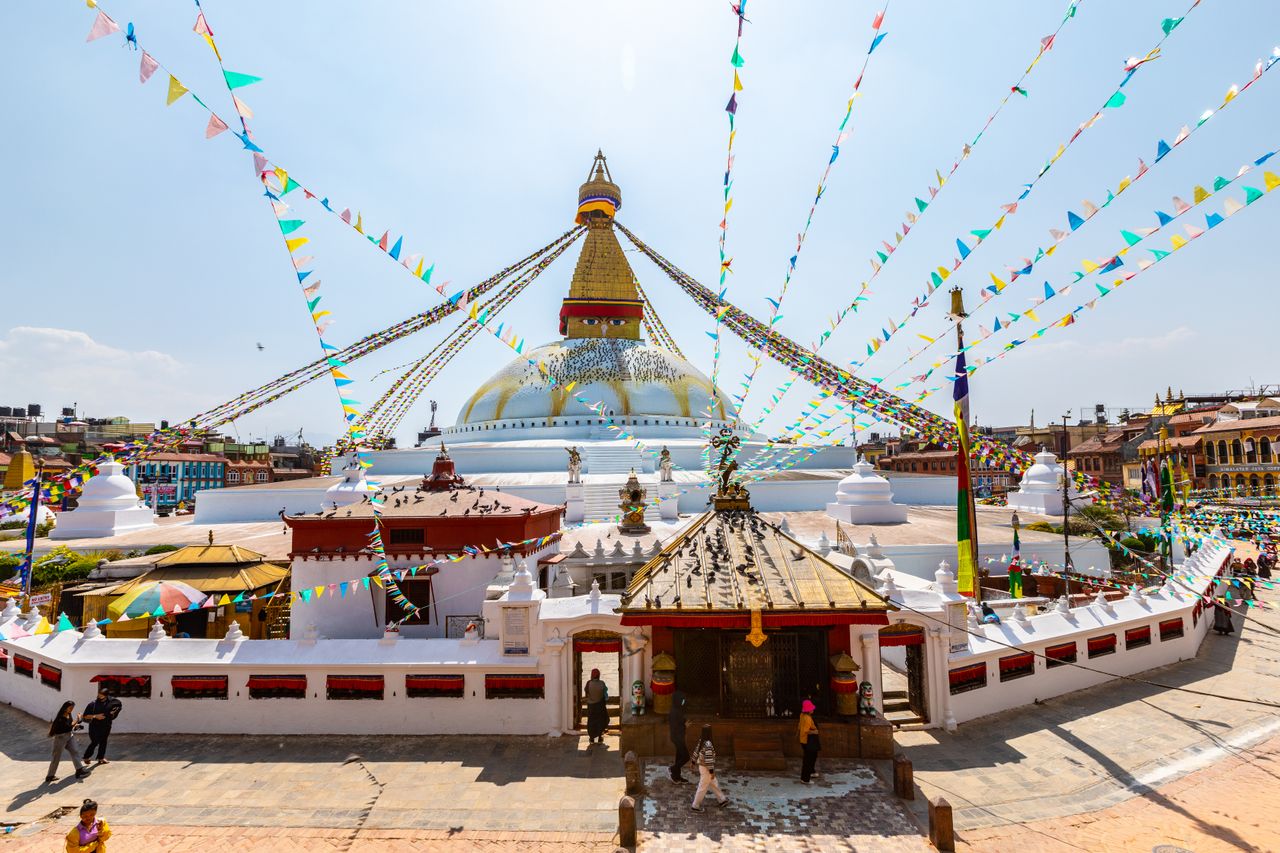
The scale stops you. Boudhanath is one of the largest Buddhist stupas in the world, built in the 14th century and reconstructed after the 2015 earthquake. The circumambulation path around the base draws monks, pilgrims, tourists, and elderly Tibetan women spinning prayer wheels. There is a rhythm to it that becomes meditative without effort. The cafes on the upper floors of surrounding buildings offer elevated views and strong coffee, a useful combination after sunset when the stupa lights up.
Pashupatinath Temple
Pashupatinath sits on the Bagmati River, the most sacred Hindu temple complex in Nepal. The cremation ghats on the riverbank are part of the site. Many visitors hesitate about this section. Most who go say it was the most memorable part of their time in Kathmandu. One traveler told us Pashupatinath was her favorite stop in the city, despite initial reservations. What visitors encounter is an open, matter-of-fact relationship with mortality that feels clarifying rather than disturbing. Non-Hindus cannot enter the main temple, but the ghats and surrounding grounds are accessible and worth several hours.
Kathmandu’s living heritage neighborhoods
Thamel
Thamel is the tourist district: gear shops, rooftop restaurants, narrow streets with motorcycles and trekking poles. It is useful for logistics. Do not mistake it for the city.
Asan Bazaar and the old city
Asan Bazaar is two kilometers from Thamel and several centuries away. This is the historic trade center of the old city: spice merchants, dried goods, metalwork, and the Annapurna temple at the intersection of six streets. The Durbar Square complexes in Kathmandu, Bhaktapur, and Patan each contain palaces, temples, and courtyards built between the 12th and 18th centuries. Kathmandu’s Durbar Square is the most visited; Bhaktapur’s is the best preserved.
Day trips worth taking from Kathmandu
Bhaktapur
Bhaktapur is 13 kilometers east of Kathmandu and the most intact medieval city in the valley. Travelers describe its pagodas, temples, palaces, narrow laneways, and warm-brick facades as the most extraordinarily beautiful urban environment in Nepal. The Peacock Window, 55-Window Palace, and pottery square have survived relatively intact. A full day here is not excessive. The entry fee (currently around USD 15 for international visitors) funds ongoing restoration.
Patan (Lalitpur)
Patan’s Durbar Square holds some of the finest examples of Newari architecture in the valley. The Krishna Mandir, built entirely in stone, is technically remarkable. The Patan Museum inside the old palace is the best museum in Nepal: small, well curated, and genuinely informative about the art and architecture surrounding it.
Chandragiri Hills
The cable car up Chandragiri sounds like a tourist shortcut. Visitors are routinely surprised. One traveler who expected little told us the view was insanely beautiful, with the entire Himalayan range stretched across the horizon. On clear mornings between October and March, the panorama from Chandragiri takes in Langtang, Ganesh Himal, Annapurna, Dhaulagiri, and more. It is among the best accessible mountain views in Nepal, with no hiking required.
Food and local life in Kathmandu
Thamel has every type of restaurant you would expect in a tourist district, from pizza to Israeli food to decent espresso. None of it represents Kathmandu.
Newari cuisine is the food of the valley’s indigenous community, developed over centuries in the trade cities of the valley. Dishes like chatamari (a rice crepe), bara (lentil pancakes), and choila (spiced buff) have a depth that comes from fermented, dried, and smoked ingredients used in combination. Newari food is vastly organic, with a range of taste built on ample and precise spicing. Find it in small restaurants in Asan, Patan, and Bhaktapur, the ones without tourist menus posted outside.
How many days do you need in Kathmandu?
Two to three days covers the core: the three main heritage sites in the valley, one day trip, and enough time to eat properly and move slowly. Travelers connecting to a trek often allow only one night; this is functional but leaves the city underexplored.
If you are combining Nepal with Tibet or Bhutan, Kathmandu is the entry and exit point for all three. Building three or four days at either end means you return from the mountains with time to visit the city properly and cover any logistics without pressure.
Practical notes for getting around
Drivers don’t always run the meter. Agree on a fare before getting in, or insist on it. Walking between Thamel, Durbar Square, and Asan is feasible and recommended. For day trips to Bhaktapur, Patan, and Chandragiri, a private car with driver (arranged through any hotel or travel agent) is the most practical option.
FAQ
How many days do you need in Kathmandu?
Two full days is a minimum for the major heritage sites. Three gives you room for at least one day trip and time to eat and walk at a reasonable pace. If using Kathmandu as a gateway to a trek or onward travel to Bhutan or Tibet, build at least two nights at each end of your trip.
Is Kathmandu safe for tourists?
Kathmandu is generally safe for independent travelers. Traffic is chaotic, air quality in winter months is poor, and petty theft in Thamel is possible. Standard precautions apply. Political demonstrations occasionally affect movement around Durbar Square but rarely affect visitor safety.
What is the best time to visit Kathmandu?
October and November are the clearest months for mountain views and stable weather. March to May brings warmer temperatures. December through February is colder but clear. June to September is monsoon season: heavy rain, reduced mountain visibility, though the valley stays green and festivals continue.
Do you need a guide in Kathmandu?
The city is navigable without a guide. For heritage sites, a licensed guide adds meaningful depth: the iconography, history, and living religious practice at places like Pashupatinath require explanation to be understood rather than simply seen. Hawkseye Travels arranges private guided visits to all major sites as part of broader Nepal itineraries. For what to expect at temples and sacred sites, our Nepal cultural etiquette guide covers dress codes, customs, and temple protocol.