

Luxury Annapurna Circuit Trek
Most people who walk the Annapurna Circuit do it the way it has always been done. Teahouses, shared dormitories, communal dining rooms, and whatever the weather decides. That version of the circuit is genuinely worth doing. But it asks for a tolerance for variability that not every traveller wants or needs.
Our luxury circuit covers the same 160 to 230 kilometres. It crosses the same 5,416-metre Thorong La Pass. The difference is what surrounds the walking: private lodge accommodation with en-suite rooms and hot showers at every stop, a dedicated lead guide and an assistant guide on trail, and one porter per guest as a standard ratio. At road-accessible points, our vehicle team has warm clothes, dry gear, and a hot meal waiting when you come off the mountain.
We arrange the permits, the logistics, the contingencies. You arrange the time off.
Trek overview
The Annapurna Circuit circles the Annapurna massif through two distinct zones: the wet, forested valleys of the south and the arid high-altitude plateau of the Mustang region to the north. The full loop runs between 160 and 230 kilometres and typically takes 14 to 21 days, depending on which variants you take.
The route crosses Thorong La Pass at 5,416 metres. Below the pass, the trail drops into the Kali Gandaki Gorge, one of the deepest river gorges on earth. The circuit starts in Besisahar at 820 metres and finishes in Pokhara, passing through subtropical lowlands, mid-hill forests, alpine scrub, and high desert in sequence.
Regions covered: Marshyangdi Valley, Manang district, Mustang plateau, Kali Gandaki corridor, and the Annapurna South foothills above Pokhara.
Luxury inclusions
The real difference between a teahouse circuit and a private lodge circuit is recovery. When you sleep well, eat properly, and are not managing logistics in your head, you give more to the walking. That is what these inclusions are for.
- Private lodge accommodation at each stop. En-suite rooms, hot water, heating where available. No shared dorms.
- Dedicated lead guide with a minimum of 10 years on the Annapurna Circuit. Responsible for your itinerary, safety calls, and altitude monitoring throughout.
- Assistant guide on trail at all times. Manages pace, supports guests who need extra attention, carries the emergency kit.
- 1:1 porter ratio. One porter per guest. Pack weight is managed. Our porters carry within ethical load limits.
- Vehicle support at road-accessible points. Gear transfers, warm layers, and hot food waiting at section ends.
- Full medical kit including a Gamow bag for acute altitude sickness, pulse oximeters, and a lead guide trained in wilderness first aid.
- Satellite communication device carried by the lead guide for the full duration of the trek.
Itinerary highlights
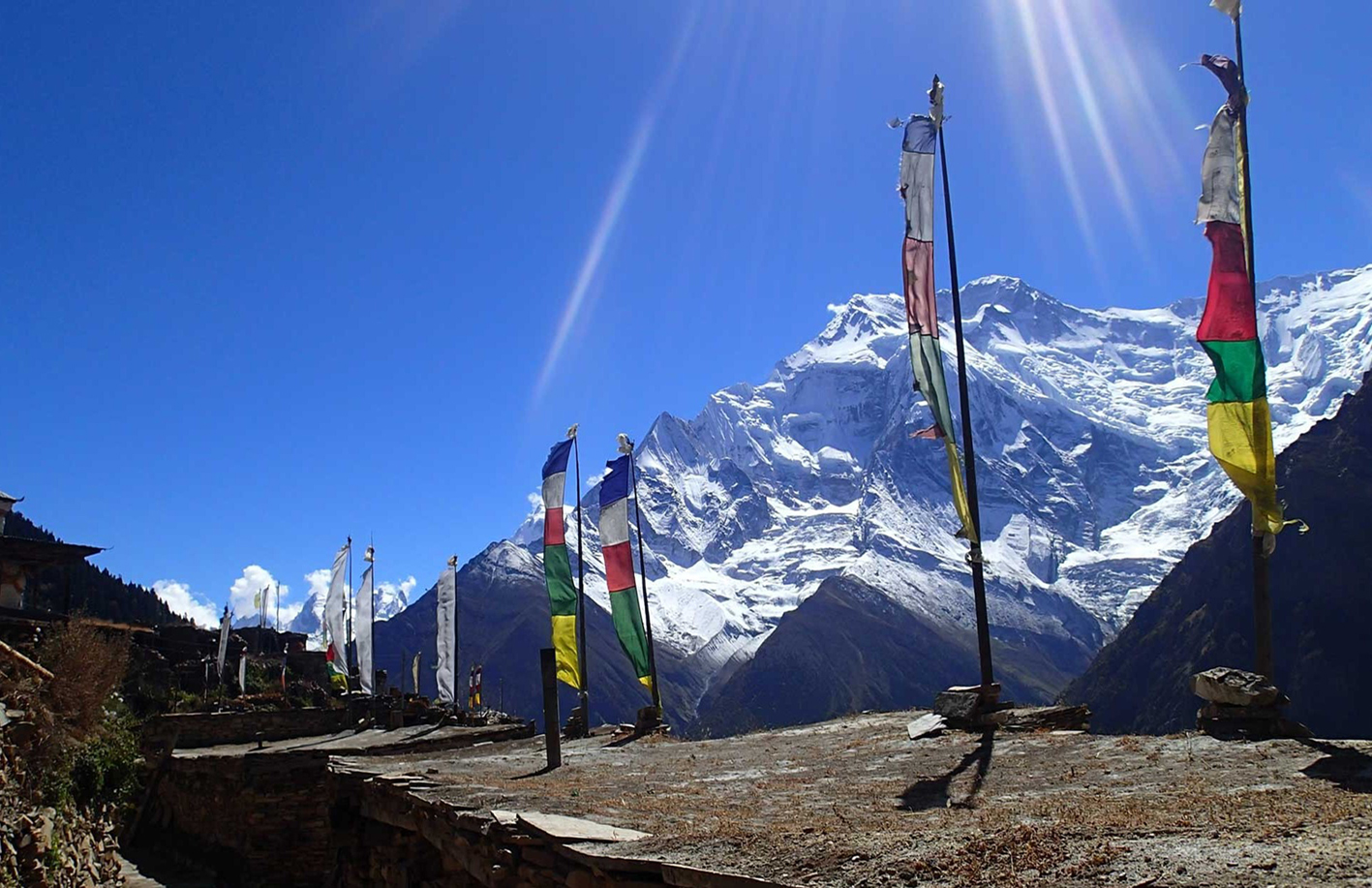
Manang (3,519m) acclimatisation. We build at least one rest day here. Usually two. Manang sits at the base of the high section and is where altitude adaptation happens. We use this time for short hikes to around 4,000 metres, not passive sitting. Going higher and sleeping lower is what drives the adaptation.
Thorong La Pass (5,416m). The crossing starts early. Most groups leave Thorong Phedi or High Camp between 3am and 5am to clear the pass before afternoon wind picks up. The ascent from High Camp at 4,850 metres takes 3 to 4 hours. The descent to Muktinath drops roughly 1,600 metres over 8 to 10 kilometres on loose, steep trail. Most guests find the descent harder on the knees than the ascent was on the lungs. It is the section most people describe as the best day of their trekking life, which is saying something on a 21-day route.
Muktinath Temple (3,710m). One of the most sacred sites in both Hindu and Buddhist traditions, Muktinath sits just below the pass descent. Most groups take two to three hours here before continuing south.
Marpha village and apple brandy. Marpha has whitewashed walls, a medieval lane structure, and orchards that produce some of the best apples in Nepal. The village makes its own apple brandy. Worth trying once you are off the high section and your body is functioning normally again.
Tatopani hot springs (1,190m). After 5,416 metres and two weeks at altitude, the natural hot springs here are a practical recovery tool. We schedule enough time to use them, not just see them.
Pokhara finish. The circuit ends in Pokhara. Two nights here are included as standard, which is the minimum your legs need before a flight.
Best season
October and November are the post-monsoon months. The trail is clear, visibility is sharp, and temperatures at Thorong La run from around -10C at night to 5C at midday on crossing day. Lodge availability across the route is at its best in early October. By late November, high-altitude sections above 4,000 metres see snow on the trail and temperatures drop considerably.
March and April are the pre-monsoon window. Rhododendron forests below 3,500 metres are in full bloom, and lower trail conditions are excellent. Thorong La is passable but colder than October, with typical crossing temperatures between -15C and 0C. From late April, afternoon cloud builds over the range, which affects views but not safety if you cross early.
We do not run the full circuit in July or August. The lower sections are heavily affected by monsoon rainfall and trail damage, and Thorong La is high risk. The Mustang plateau sits in a partial rain shadow and stays drier, but that is a different itinerary from the full circuit.
For a full breakdown of luxury lodge availability and booking windows by season, see our guide to the best time to visit Nepal for a luxury trip.
Who this trek is for
You do not need technical climbing experience. The circuit is a walking route.
What it does require is a reasonable baseline of cardiovascular fitness. You should be comfortable walking 4 to 6 hours on uneven ground before you arrive. And it requires patience with acclimatisation. Rushing the high section is the primary cause of problems on this route, not fitness.
The circuit suits travellers over 50 particularly well. With a 1:1 guide-to-guest ratio and private vehicle backup, the variables that make a group trek difficult for older trekkers are managed. We have guided guests in their late 60s across Thorong La. What made it work was preparation, pacing, and not cutting the acclimatisation days at Manang.
Couples who want a shared challenge on their own terms, without the group-tour dynamic, do well on this format. Your itinerary, your pace, your lodge. No decisions made by committee.
First-time trekkers are better positioned here than on a standard circuit. You are not navigating alone, managing accommodation on arrival, or handling altitude symptoms without support.
Booking and permits
Two permits are required for the Annapurna Circuit:
- TIMS card (Trekkers’ Information Management System). A standard trekking registration card required for most Nepal treks.
- ACAP permit (Annapurna Conservation Area Project). The entry permit for the conservation area. Current fee for foreign nationals: NPR 3,000 (approximately USD 22).
We handle both permits as part of your booking. You provide passport details; we register and collect in Kathmandu before departure.
Six to eight weeks is the minimum lead time we work with for a private luxury circuit. That window covers lodge confirmation across the full route, guide and porter team booking, and vehicle logistics. October slots fill faster than the calendar suggests. If you are targeting peak season, ten to twelve weeks is the safer assumption.
We run private circuits for groups of 2 to 8. Larger groups are considered case by case.
Frequently asked questions
How difficult is the Thorong La crossing?
Demanding, but not technical. The ascent from High Camp at 4,850 metres to the 5,416-metre summit takes 3 to 4 hours at altitude pace. The difficulty is aerobic: thin air, sustained uphill effort, cold temperatures. The descent to Muktinath is roughly 1,600 metres over 8 to 10 kilometres on loose, steep trail. Most guests find the descent harder on the knees than the ascent. Trekking poles and proper footwear are not optional.
Can I do the Annapurna Circuit without prior trekking experience?
Yes, if you prepare. The route requires no technical skills. It requires cardiovascular fitness and a genuine willingness to acclimatise slowly. We recommend 8 to 12 weeks of regular hiking or cardio training before departure. Guests with no trekking background who arrive prepared complete the circuit regularly. Guests who arrive unfit and expect the guide to compensate do not.
What is the difference between a teahouse circuit and a private lodge circuit?
On a teahouse circuit, you stay in basic mountain guesthouses with shared bathrooms, fixed menus, and limited heating. Quality varies significantly by location and season. On the private lodge circuit, we pre-book the best accommodation available on the route: en-suite rooms, consistent hot water, better food. Over a 14 to 21 day trek, the recovery difference compounds. Better sleep at altitude also improves acclimatisation.
Is altitude sickness a real risk on this trek?
Yes. The circuit reaches 5,416 metres. Acute Mountain Sickness affects a percentage of trekkers at this altitude regardless of fitness level. Symptoms include headache, nausea, fatigue, and disrupted sleep. Our guides monitor guests daily with pulse oximeters. We carry a Gamow bag for severe cases and have a clear descent protocol if symptoms progress. Proper acclimatisation is the best protection, which is why we do not shorten the Manang rest days regardless of group pressure.
Can the itinerary be customised?
Yes. The standard circuit is 14 to 21 days, but we build around the group. Extensions into Upper Mustang are available for groups with more time. The lower circuit can be shortened by vehicle on road-accessible sections. Some groups fly from Jomsom rather than walk the Kali Gandaki corridor. We discuss all options at the planning stage.
Book your Annapurna Circuit
We run a limited number of private circuits each season. Contact us with your preferred travel window and group size. We will confirm availability and send a detailed itinerary proposal within 48 hours.
Want a detailed look at what the standard teahouse version of this route involves? Our Annapurna Circuit trek guide covers permits, altitude, accommodation, and what to expect on trail. For a breakdown of what private lodge trekking costs across Nepal’s routes, see our Nepal luxury travel cost guide.
Contact us to start planning.