
A Tanzania safari from Nepal is one of the longest trips you can take and one of the most disorienting to plan. The flights are not intuitive, the costs range from $1,500 to $15,000+ depending on how you go, and every tour operator website makes it sound simpler than it is.
This guide covers what the packages do not: which parks are actually worth it for first-timers from Kathmandu, what $4,500 realistically includes, visa and health requirements for Nepali passport holders, and a few things experienced safari-goers wish someone had told them before they booked.
Getting there from Kathmandu: flights and transit
There are no direct flights from Kathmandu to Tanzania. The two most common routes:
- Via Dubai (Emirates): KTM to DXB to Dar es Salaam or Kilimanjaro. Total travel time: 14 to 16 hours including layover.
- Via Doha (Qatar Airways): KTM to DOH to Dar es Salaam or Kilimanjaro. Total travel time: 15 to 17 hours.
Both have multiple daily departures. Emirates through Dubai tends to offer shorter layovers; Qatar Airways often has better fares if you book early.
Which airport in Tanzania? Most safari packages fly into Kilimanjaro International Airport (JRO) for itineraries in the Serengeti/Arusha corridor, or Julius Nyerere International Airport (DAR) in Dar es Salaam for southern circuit safaris and coastal extensions. Hawkseye Nepal packages use Kilimanjaro as the primary gateway.
Round-trip fares from Kathmandu to Tanzania typically run $700 to $1,200 depending on timing and routing. Flights are usually not included in safari packages. This is one of the most common budget surprises.
Visa and health requirements for Nepali citizens
Visa: Nepali passport holders need a Tanzania tourist visa. Apply online via the Tanzania e-Visa portal (evisa.immigration.go.tz) before departure. Single-entry tourist visa: $50. Multi-entry: $100. Processing takes 3 to 10 business days. You can get a visa on arrival at Kilimanjaro airport, but the queues are long and unpredictable. Online is the better option.
Yellow fever: Tanzania requires proof of yellow fever vaccination if you arrive from a yellow-fever-endemic country. Nepal is not on that list. But if your transit route passes through certain African countries, you may need the certificate. Check with a travel health clinic before departure. The vaccination takes 10 days to become effective.
Malaria: Tanzania is a malaria zone. See a doctor 4 to 6 weeks before travel for antimalarial medication. Long sleeves at dusk are standard, not optional.
Travel insurance: Remote game reserves mean a medical emergency requires helicopter evacuation. This is not a hypothetical. It is the actual evacuation method from parks like Serengeti and Ngorongoro, and it is expensive. Standard travel insurance often excludes this; verify the coverage explicitly before you buy.
Which parks to visit: Tarangire, Serengeti, or Ngorongoro?
Tanzania has around 22 national parks. For most first-timers, the choice comes down to three.
Tarangire National Park
Tanzania’s most underrated park. Tarangire has the highest elephant concentration in Africa. Herds of 200 to 300 are common during the dry season, when animals across the region converge on the Tarangire River as the only reliable water source. The landscape is defined by ancient baobab trees. It is genuinely unlike anything in the Serengeti.
Tarangire is also significantly quieter. If 30 safari vehicles circling a lion pride is not your idea of wilderness, this is the better starting point.
Hawkseye Nepal’s Tanzania packages are built around Tarangire. Not as a concession to cost, but because for first-time safari visitors, Tarangire delivers more wildlife per hour of game drive than any other park in the country.
Serengeti National Park
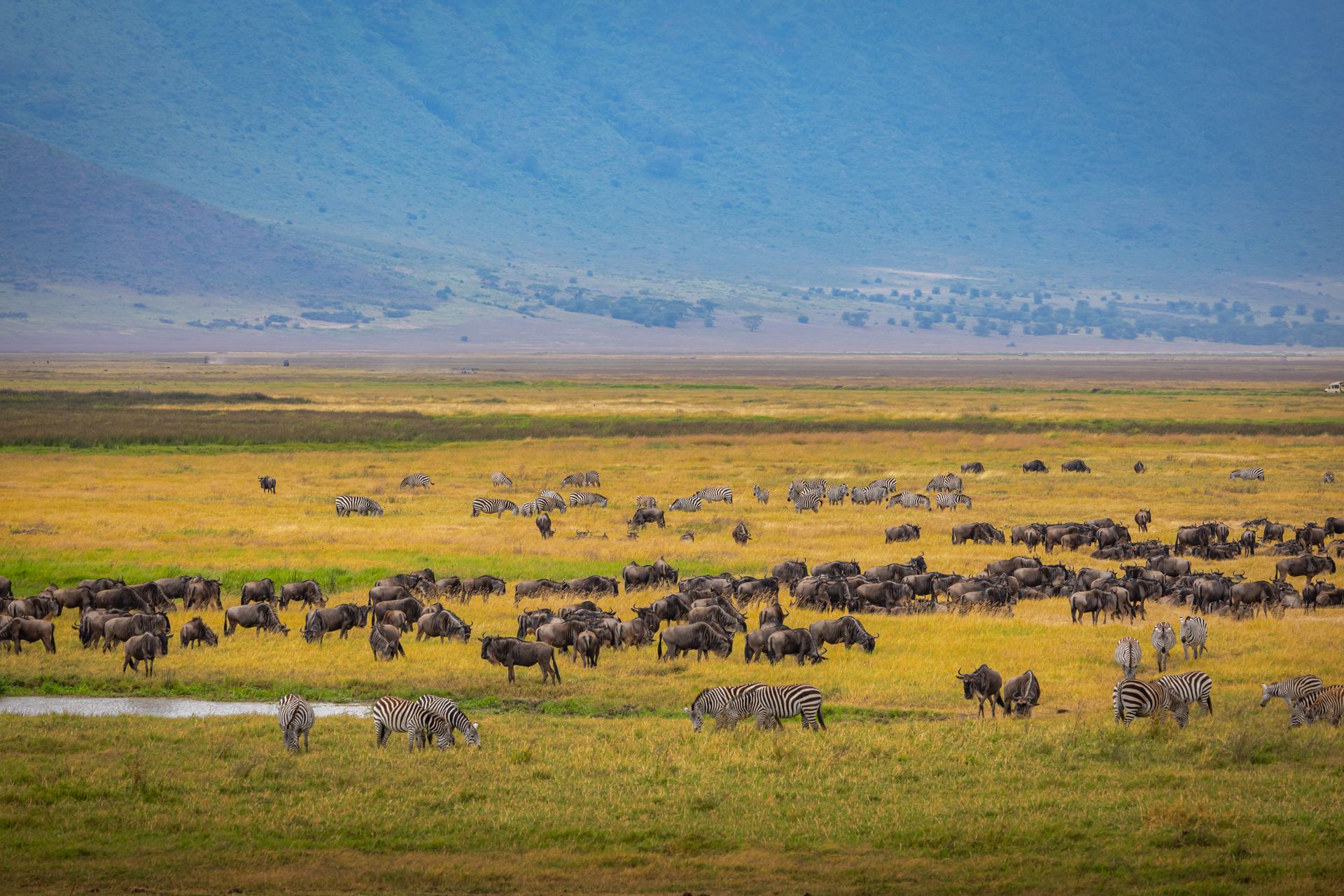
14,750 square kilometres of open savannah, home to all Big Five. The annual Great Migration, where roughly 1.5 million wildebeest and 200,000 zebra move in a circuit between Tanzania and Kenya, is one of the more staggering wildlife events on earth.
One seasoned safari reviewer put it honestly: they had only seen a small percentage of the wildebeest despite witnessing herds that seemed to stretch to the horizon. The scale is beyond what photographs prepare you for.
Serengeti requires a minimum 3-day stay to cover meaningful ground. Peak migration season (July to September) books out 9 to 12 months ahead.
Ngorongoro Crater
A UNESCO World Heritage site. A volcanic caldera 19 kilometres wide, home to around 30,000 animals, including one of Africa’s most endangered black rhino populations. Wildlife density is extraordinary. But because the crater is enclosed, most itineraries combine Ngorongoro with Serengeti or Tarangire for variety.
What does a Tanzania safari from Nepal actually cost?
Budget $3,000 to $10,000 per person for a quality safari, not including international flights from Kathmandu.
| Safari type | Per person per day | What you get |
|---|---|---|
| Budget / group | $150 to $250 | Shared tent camps, group of 12 to 14, fixed itinerary |
| Mid-range | $300 to $450 | Small-group lodges, private guide, flexible timing |
| Luxury / private | $500 to $1,000+ | Private camps, dedicated vehicle, full-board |
Hawkseye’s Tanzania package at $4,500 covers park fees, accommodation, ground transport, guide, and full-board meals during the safari. International flights from Kathmandu are not included. Add $700 to $1,200 for return fares.
What’s typically not in any package: visa fees ($50), travel insurance, tips (standard etiquette: $10 to $15 per day for guides, $5 for trackers), and beverages outside meals. Tanzania also collects a conservation levy at park entry. Legitimate packages include this. Confirm it explicitly before you book.
What no one tells you before you go
Wildlife sightings are not guaranteed. One reviewer noted honestly that after a full day in the Serengeti, they never saw a lion. The bush does not perform on schedule. A great guide dramatically improves your odds. A seasoned guide at Safaribookings found endangered black rhinos using decades of instinct while others in the same area saw nothing.
Common animals become background. By day three, zebra and giraffe barely register. This sounds like a criticism. It is not. It means you are actually in the wild.
The nights are louder than you expect. Hyenas scavenging near camp kitchens through the night make deep sleep nearly impossible. Lodge accommodation is quieter. Tented camp accommodation is not. Know which you are booking.
Dark clothing attracts tsetse flies. Their bite is significantly more painful than a mosquito’s. Safari guides do not wear black. Neither should you. Khaki, olive, and grey are standard for a reason.
The dust is real. Dry-season game drives on savannah roads generate dust that gets into everything. A buff or light scarf matters more than it sounds.
When to go: Tanzania safari calendar
| Period | Conditions | Best for |
|---|---|---|
| June to October | Dry season, peak visibility | All parks, especially Tarangire elephant herds |
| July to September | Peak Great Migration | Serengeti river crossings |
| January to March | Short rains, shoulder season | Calving season, fewer crowds, lower prices |
| April to May | Heavy rains | Avoid – roads impassable, visibility poor |
| November | Humid, long rains beginning | Avoid unless budget is the primary concern |
Dashain falls in October, at the end of dry season. If you are planning to travel around a major Nepali holiday, book 6 to 9 months in advance. Departure slots and camp accommodation fill quickly.
FAQ: Tanzania safari from Nepal
How long should a Tanzania safari be?
Minimum 5 days in-country for a genuine experience. A 7 to 10-day itinerary is more realistic once you factor in travel days from Kathmandu. Anything shorter than 4 full game days does not give the experience room to unfold.
Is Tanzania safe for tourists?
Tanzania is one of East Africa’s most stable countries for tourism. The parks operate under strict protocols. The main precautions are health-related: malaria, food safety (stick to hot food and bottled water), and travel insurance that covers evacuation.
Can I combine Tanzania with Zanzibar?
Yes. Zanzibar is a 1-hour flight from Dar es Salaam. Beaches, Swahili culture, seafood. Most Tanzania itineraries can extend to 3 to 4 nights there.
What is the difference between a group and private safari?
Group safaris move at the pace of the group on fixed routes. Private gives you a dedicated vehicle and guide who can stop where you want, follow an animal, and adjust timing. The price difference is significant. So is the experience difference.
What vaccinations do I need beyond yellow fever?
Typhoid, hepatitis A, and tetanus updates are recommended. A travel health clinic will give you a current list based on your routing and planned activities.
Book Tanzania with Hawkseye Nepal
Hawkseye Nepal’s Tanzania safari is built around Tarangire National Park, one of Africa’s most elephant-dense wilderness areas and significantly quieter than the Serengeti. The package includes park fees, accommodation, full-board meals, ground transport, and a dedicated safari guide.
For step-by-step booking logistics including visa timelines, flight routing, and what to confirm before you sign, see our guide to how to book a Tanzania tour from Nepal.
About the author
Govinda Ghimire is Operations Incharge at Hawkseye Travels, based in Kathmandu. He coordinates trekking and tour logistics across Nepal, Bhutan, and Tibet, and has worked in Himalayan travel operations for over a decade. His knowledge covers high-altitude routes, permit requirements, and seasonal conditions across the regions Hawkseye operates in.