

Booking a Tanzania tour from Nepal is more straightforward than most travellers expect. You fly out of Kathmandu via Doha or Dubai, clear Kilimanjaro International Airport or Nairobi depending on your itinerary, and within 24 hours of leaving the Himalayas you are watching wildebeest cross the Serengeti plain.
Hawkseye Travels has been arranging Tanzania packages for Nepali and international clients since 2022, handling routing, visa paperwork, ground operators, and lodge bookings end to end. Here is how it works.
Why Nepal travellers are increasingly choosing Tanzania
Tanzania is one of the few destinations that matches Nepal for sheer scale of landscape. The Serengeti covers 14,763 square kilometres. Ngorongoro Crater holds one of the highest concentrations of wildlife on Earth. Kilimanjaro, at 5,895 metres, is the highest peak on the African continent, a number that means something to Nepali travellers who understand altitude.
The pairing also makes practical sense. A Nepal-based operator familiar with permit logistics, altitude management, and multi-country itineraries is better placed to combine both destinations than a standard Africa-only agency.
What a Tanzania tour from Nepal typically covers
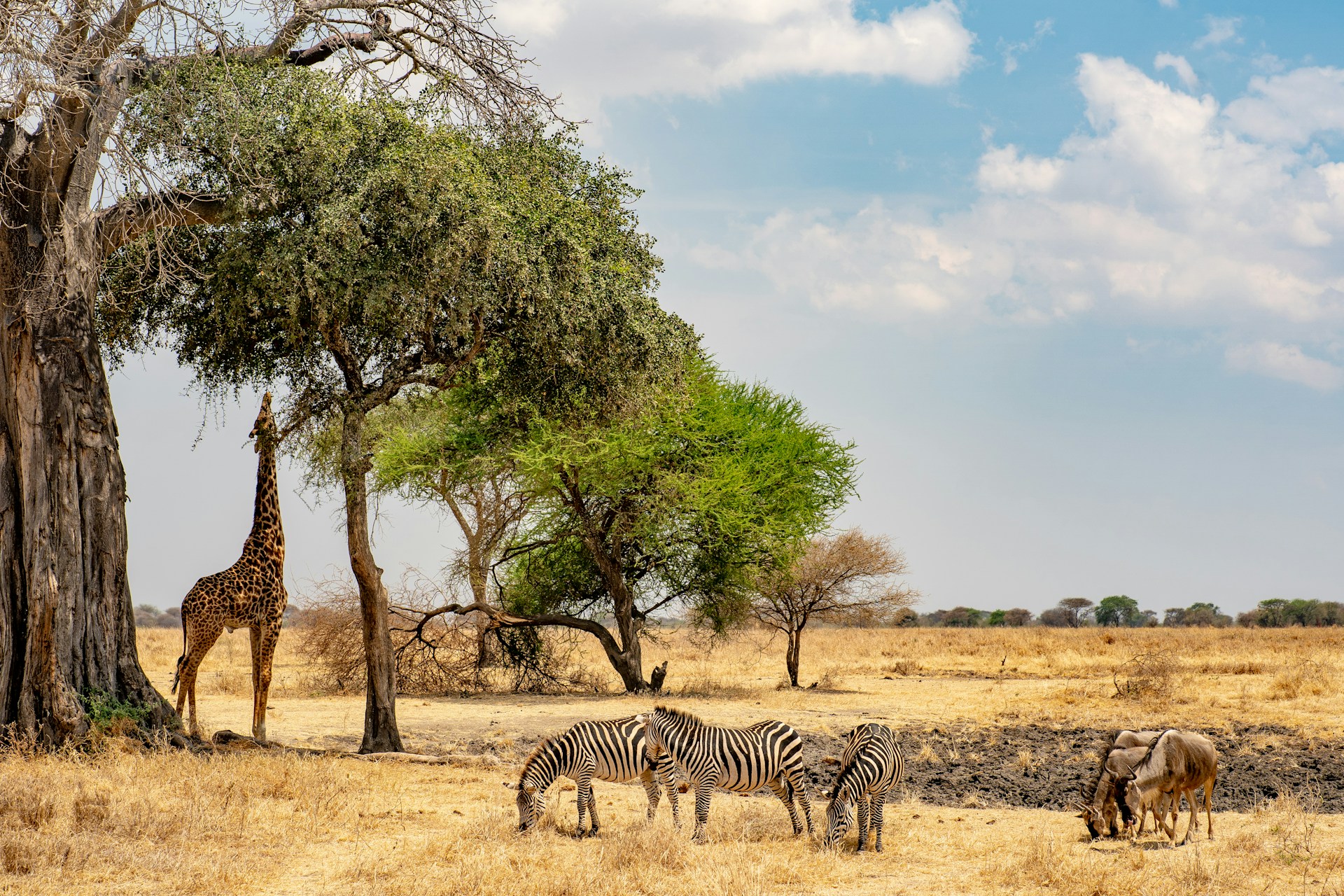
Most Hawkseye Tanzania itineraries run 8 to 14 days. A standard safari circuit includes four areas.
The Serengeti is the headline destination. The southern section is best for the calving season, which runs December to March. The central Seronera corridor produces reliable lion and leopard sightings year-round. The Mara River crossings in the north happen between July and October.
Ngorongoro Conservation Area is a UNESCO World Heritage Site and a self-contained ecosystem. The crater floor holds around 25,000 large animals within a 260-square-kilometre caldera. Game drives here are concentrated; sightings come quickly.
Tarangire National Park gets left off standard itineraries, which is a mistake. During the dry season it is one of the best parks in East Africa. The elephant population numbers in the thousands, and the baobab landscape is unlike anything else on the continent.
Zanzibar. Many clients add three to four days at the end of the safari circuit. Stone Town, the spice routes, and the Indian Ocean reef make it a logical add-on, and the transition from dust to beach takes about an hour by air.
How Hawkseye handles the logistics
A Tanzania tour from Nepal involves several moving parts: domestic flights within Tanzania, lodge bookings across parks, visa arrangements, and routing through a hub airport. Supply at premium lodges during peak season is genuinely limited. Booking late is the main reason clients end up at their second-choice properties.
From Kathmandu, the most direct connections go through Doha on Qatar Airways or Dubai on Emirates and flydubai. Both have onward connections to Kilimanjaro International Airport, the standard entry point for northern Tanzania. Travel time from Kathmandu, including the connection, is typically 14 to 18 hours.
Nepali citizens require a Tanzania tourist visa, available on arrival at Kilimanjaro and Dar es Salaam airports for USD 50. The East Africa Tourist Visa, which covers Kenya, Uganda, and Rwanda in addition to Tanzania, is also available but adds complexity if the itinerary is Tanzania-only.
Hawkseye coordinates with established ground operators in Tanzania for game drives and park logistics. Lodge quality in East Africa varies considerably. Mid-range bush camps and luxury tented camps are different categories entirely, and the distinction affects what you actually experience on the ground.
What it costs
Tanzania safaris from Nepal typically run USD 3,500 to USD 8,000 per person for a 10 to 12-day itinerary, depending on lodge tier, number of parks, and flight routing.
The main cost variables:
- Lodge category: Mid-range bush camps run USD 150-300 per person per night. Luxury tented camps with full-board run USD 400-1,000 and above.
- Private vs shared game drives: Private vehicles let you dictate timing and duration. Shared vehicles are standard at budget and mid-range camps.
- Flights: Kathmandu-Tanzania return fares range from NPR 90,000 to NPR 180,000 depending on airline and season. Internal Tanzania flights between parks add USD 150-500 per sector.
Best time to visit Tanzania from Nepal
The dry season, June through October, is the most reliable window for game viewing. Vegetation thins, animals gather around water sources, and the Great Migration reaches the Mara River crossings by July. Roads are passable and lodge availability is high, but peak months need to be booked six to twelve months in advance.
The short rains in November and long rains from March to May bring lower prices and fewer crowds. Some remote camps close during this period, and roads in southern parks can become impassable.
Planning your Tanzania tour from Nepal
Hawkseye starts with a call to understand what you want from the trip: wildlife priorities, comfort requirements, budget range, and whether you want to add a Himalayan leg before or after the Africa portion.
Tanzania does not require the physical preparation of a Himalayan trek, but it rewards advance planning. Safari lodges in prime locations book out months ahead. Flight routing options multiply or narrow depending on when you travel. The Tanzania Tourism Board website carries current visa requirements and entry guidance.
For a detailed breakdown of which parks to visit, real costs, and what experienced safari-goers wish they had known before they booked, see our Tanzania safari planning guide.
To start building your itinerary, visit our Tanzania destination page or contact the Hawkseye team directly.